

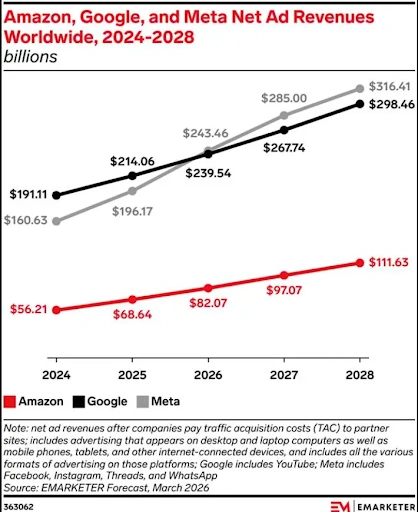
The digital advertising landscape is changing fast, and one of the biggest shifts is Meta’s projected move ahead of Google in global ad revenue by 2026. According to Emarketer, Meta is expected to generate about US$243.46 billion in digital ad revenue, slightly above Google’s US$239.54 billion. This matters because it shows how user behaviour, AI-driven targeting, and platform engagement are reshaping online advertising. For businesses, the key takeaway is simple: success now depends on using the right mix of Google ads, Facebook Ads, and Meta Ads based on audience intent, platform strengths, and campaign goals.
The Bigger Story Behind Meta’s Growth
This headline is grabbing attention, but the reasons behind it are actually more important than the forecast itself.
Meta has become stronger because it understands how people spend time online. People scroll, watch, click, and discover things without actively searching for them. That creates a huge opportunity for advertisers.
A few things have helped Meta grow:
- Short-form videos keeping users engaged longer
- Smarter ad targeting through AI
- Better campaign automation
- More places to show ads across platforms
In simple terms, Meta has become better at helping businesses appear in front of people before they even start looking.
What This Means for Advertisers
Even with all the talk about Meta’s growth, Google still plays a huge role.
The difference is intent. When someone types into Google, they usually want something specific. That makes Google ads incredibly useful for businesses trying to capture ready-to-buy customers.
Google works well for:
- Service-based businesses
- Local searches
- Immediate enquiries
- High-converting leads
So this is not a case of Meta replacing Google. It is more about how each platform fits into the customer journey.
Why is Meta Expected to Surpass Google in Digital Ad Revenue by 2026?
Meta is expected to grow faster because it benefits from stronger AI targeting, higher user engagement, and more ad placements across its platforms. For businesses, the key lesson is to use Google ads, Facebook Ads, and Meta Ads strategically instead of relying on just one channel.
Where Facebook and Meta Fit Best
Social platforms work differently from search. They are not always about direct intent. They are often about attention.
That is why Facebook Ads and Meta Ads tend to perform well for:
- Brand awareness
- Product discovery
- Retargeting website visitors
- Building familiarity over time
For many businesses, these platforms are where the first touchpoint happens. Someone may see an ad while scrolling, remember the brand later, and then search for it days after. That kind of journey is becoming more common.

A Simple Comparison
Here is a quick way to think about the strengths of each channel:
| Platform | Best For | Main Strength |
| High-intent leads | Captures active demand | |
| Meta | Awareness and discovery | Builds interest early |
| Retargeting and niche reach | Strong audience targeting |
No platform is better in every situation. It depends on the business, audience, and goal.
What Businesses Should Actually Do Now
This is where many companies get stuck. They see headlines like this and think they need to move all their budget.
That usually leads to poor decisions. A better approach is to step back and look at how customers actually behave.
Questions worth asking:
- Where do enquiries usually come from?
- Are people finding the business through search or social?
- Which campaigns are bringing quality leads?
- Is the landing page doing its job?
A good SEM strategy should never be built around trends alone. It should be built around what actually works.
Why Strategy Matters More Than the Platform
One thing we have seen time and again: businesses often focus too much on the platform and not enough on the message.
The reality is, even the best ad platform cannot fix:
- Poor targeting
- Weak creative
- Slow landing pages
- Unclear offers
This is why search engine marketing today is not just about running ads. It is about building the full customer journey properly.
That includes:
- Knowing the audience
- Writing better ad copy
- Testing creatives
- Tracking conversions
- Improving pages after the click
That is what drives long-term results in Digital Ads.
The Role of AI Is Only Growing
Another reason this shift matters is because both Meta and Google are leaning heavily into automation.
AI is now shaping:
- Who sees ads
- When ads appear
- What bids are placed
- Which creative performs best
This can be powerful, but only if the strategy behind it is clear.
Businesses that simply “turn on ads” without a plan often waste their budget. The ones that do well are the ones that understand what they are trying to achieve.
Conclusion
Meta possibly overtaking Google in ad revenue is a sign of a bigger shift in how people discover brands online. It does not mean one platform has won and the other has lost. It simply means businesses need to be more thoughtful about where they invest and how they connect with their audience.
At iClick Media, we help businesses make smart decisions across every stage of paid advertising. Whether it is refining Google ads, improving Facebook Ads, or scaling Meta Ads, we focus on strategies that match real business goals. With our experience in SEM, search engine marketing, and performance-led campaigns, we help brands stay visible, relevant, and ready for what comes next.
FAQs
1. Is Meta really going to overtake Google?
Current forecasts suggest Meta may surpass Google in ad revenue by 2026, but both platforms will remain important.
2. Should businesses stop using Google Ads?
No. Google ads are still one of the best ways to reach users with strong intent.
3. Are Facebook Ads still effective?
Yes. Facebook Ads remain useful for reaching targeted audiences and retargeting visitors.
4. What is the biggest takeaway from this shift?
Businesses need to diversify and stop relying too heavily on one platform.
5. How can businesses improve ad results?
By combining the right platform mix, strong messaging, good landing pages, and ongoing optimisation.
